The Architecture of Resilience: How the Buffalo Neighborhood Hubs Project is building social cohesion as a direct response to extreme events
People that can turn to each other for support, even in the poorest neighborhoods, can create powerful buffer against energy and climate disruptions and build political power.

For decades, the city of Buffalo has been defined by a paradox. It is known as the "City of Good Neighbors," a place where a stranger will shovel your driveway before you even wake up. Yet, we are also the 3rd-poorest city in the nation, where systemic inequality, segregation, disinvestment, aging infrastructure, and the increasing volatility of the climate have left certain neighborhoods dangerously vulnerable. We have seen what happens when the systems we rely on, such as infrastructure, emergency services, and global supply chains, reach their breaking point.
The Buffalo Neighborhood Hubs Project (BNHP) was born as a direct response to this paradox. The project is not a traditional nonprofit initiative; it is a declaration of both independence and interdependence. These "hubs" represent both physical spaces, whether a designated community center or an informal neighborhood gathering spot, as well as the network of trained neighborhood Community Responders (CRs) who mobilize when needed. By training together, the hub leaders and CRs create a resilient web of support within and between Buffalo’s neighborhoods.
Following the loss of over $20 million in federal funding due to the termination of the Environmental Protection Agency’s environmental justice programs, the project evolved from a citywide plan spanning many different neighborhoods into a focused, agile, and independent pilot across six neighborhoods. I led a team of community experts in partnership with local community-based organizations, including the Clean Air Coalition of NY, Erie County Restorative Justice Coalition, and PUSH Buffalo. The BNHP is building exactly what we need, right where we live.
The cornerstone of this project is how we build collective solidarity through social cohesion, which better prepares us to be resilient in the face of overlapping crises. The act of being my neighbor’s keeper is a shift in practice, a move from passive citizenship to active, block-level stewardship. In most urban environments, the fence has become a symbol of isolation. We stay within our boundaries, assuming that if a crisis hits, a distant government agency will arrive to save us.
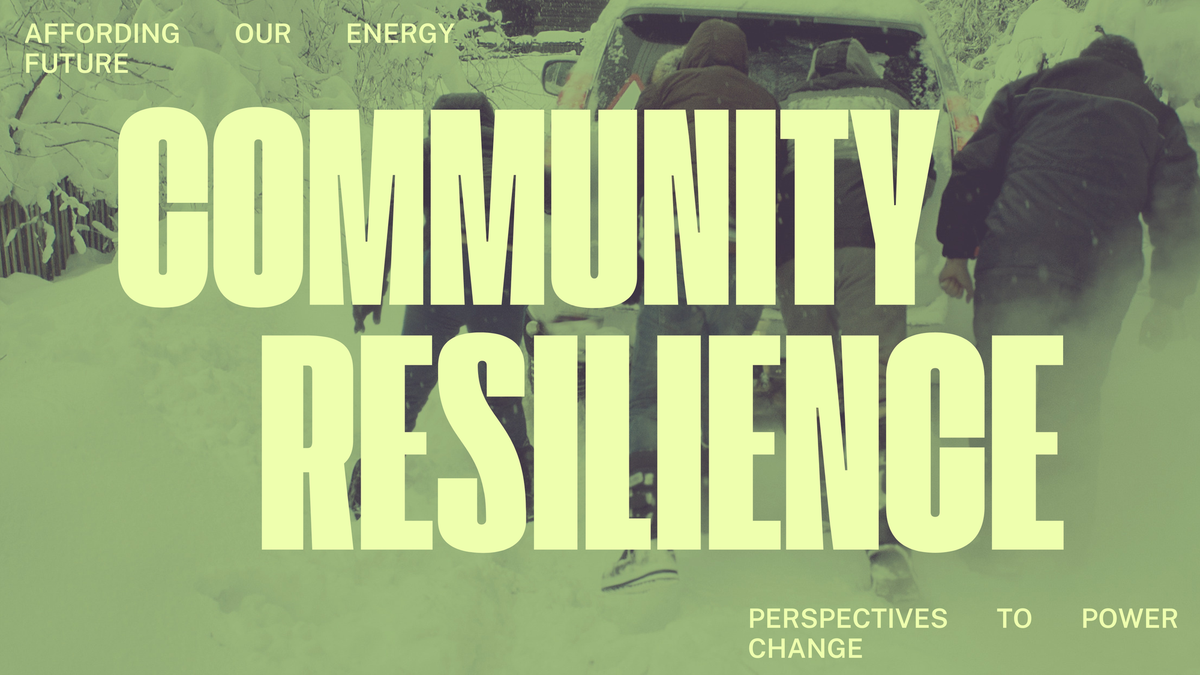
But extreme weather events and the ongoing challenges of the climate crisis are teaching us different lessons. Buffalo is home to legendary tales of record-breaking snowfall. In fact, up until the bomb cyclone–a new term to us that is now known as the Buffalo Blizzard of 2022–in which 47 members of our community died, there was nowhere I’d rather be but Buffalo during any snowstorms. That is because we know how to not only mobilize but also make it an impromptu good time.
In these current times, we know that in the first 72 hours of a disaster, your most important resource is the person living next door. By embracing the role of keeper, we are reclaiming the ancient tradition of mutual aid. Unlike charity, which is top-down, mutual aid is horizontal. It assumes that everyone has something to give and something they need. We are weaving a network of “we,” a web of interconnected neighborhoods where no one is a stranger.
The BNHP ethos is clear: when systems fail, and agencies retreat, we stand our ground. As climate change accelerates, cascading crises from extreme heat to historic snowfall become the new normal. These crises often overwhelm municipal resources.
The BNHP addresses systemic vulnerabilities by cultivating Community Responders (CRs), residents equipped with the technical skills, resources, and wisdom to navigate a crisis. CRs are trained in a diverse range of essential disciplines, including disaster response, CPR, overdose prevention, fire safety, community organizing, and restorative justice, to name a few.
Beyond physical safety, CRs serve as community tech stewards. Each neighborhood hub will build and maintain a Portable Network Kit (PNK), providing free community Wi-Fi and ensuring intranet connectivity remains active during power outages. This is place-based resilience, grown from the soil of our own streets. By decentralizing power, we ensure that even if the city’s central nervous system is paralyzed, the limbs that are our neighborhoods remain functional and empowered.
This project is not built on theory alone. It is a direct response to the stated needs of Buffalo residents. The 2025 BNHP aggregated household survey data we collected from 310 residents with our academic partner, the University at Buffalo, highlights the critical gaps we are filling. The primary concerns that were expressed by residents are: 1) significant concern about blizzards and power outages, citing past experiences where they were left without heat and electricity. The power gap showed the lack of backup energy systems. Many households reported having no backup power, which is life-threatening for those relying on medical devices like continuous positive airway pressure (CPAP) machines or nebulizers; 2) ensuring that people can access essential needs during emergencies such as food, water, backup generators, and snow removal; 3) residents indicated the neighborhood hubs can be a lifeline during emergencies if it provided food, water, a place to sleep, and device charging. There is a clear mandate for neighborhood block clubs, community centers, or one to two designated houses to be equipped with emergency generators, portable network kits, and snow removal equipment; and 4) translation services and more accessible communication from emergency system providers before, during, and after extreme emergency events.
The BNHP is currently proving its model in six demonstration neighborhoods, all in low- to moderate-income areas, each with unique challenges and pre-existing strengths. We are creating individualized neighborhood profiles for each neighborhood, highlighting differences and similarities between the hubs. This is their roadmap for resilience. We then connect each neighborhood leader and community responder with one another through collective training and peer education. This is the lattice, or network of collective infrastructure that scales resilience across our neighborhoods.
Each of our resilience hubs brings together diverse people with different needs:
1. The 14th Street Block Club (West Side)
This Hub is one of our most diverse, with residents speaking Spanish, Burmese, Karen, Arabic, Swahili, Bengali, and Dari. Census data show that over 40 languages are spoken. Key needs include adequate language access, backup electricity for medical devices, and solutions for homes without basements that suffered catastrophic pipe freezes in 2022.
2. Winslow Avenue FK Block Club (East Side)
Characterized by multigenerational family homeownership, this Hub has a strong history of elders looking out for each other. Key needs include backup generators for residents with motorized wheelchairs, access to fresh, affordable food, and access to culturally competent services that address kidney/dementia-related health concerns, especially care that keeps them at home, in proximity to their trusted community.
3. Northland Beltline Taxpayers Association (East Side)
Home to many long-term homeowners of over 50 years, this neighborhood saw a staggering 95% of households lose power during the 2022 blizzard. The Northland Workforce Training Center, which has a backup generator, served as a physical location where people could charge phones during the storm. Their main concerns are a more reliable grid infrastructure and overall safety. This neighborhood has a large elderly population and lacks access to resources, such as proximity to a grocery store, etc.
4. Olmsted Islands Block Club (South Buffalo)
Defined by "island" streets that make traditional snow plowing difficult, this neighborhood has a high percentage of elders who are often isolated. The anchor community center at Our Lady of Charity Parish provides a vital resource for emergency parking and communication networks. South Buffalo also has old grid infrastructure, and they get the snowstorm twice due to their proximity to Lake Erie. They often experience bigger storms that cause extended power outages and wreak havoc on roofs.
5. Seneca Babcock Community Association (South Buffalo)
This area boasts incredible lifelong neighborhood loyalty. However, proximity to industrial sites like the PVS Chemical plant poses specific environmental risks. The Seneca Babcock Community Center is being equipped as a primary anchor to combat frequent brownouts and provide a heated shelter.
6. Renovation 14207 Hub (Riverside/Black Rock)
A high-poverty area with a large population of youth and renters, this Hub serves a diverse community including Burmese and Spanish speakers. Renovation Church serves as the physical point of coordination, providing essential resources like AEDs, cots, and blankets for emergency sheltering.
Standard governance is often distant and bureaucratic. The BNHP proposes a governance of care that is anchored in mutual love and collective healing. Every action we take, from providing technical skills to deepening individual and collective relationships to civic engagement, is anchored in this philosophy.
This is deep Democracy in action. It means decisions about neighborhood safety and resource allocation are made by the people living there. It is a decentralized model where the "Hub" acts as a kitchen table for the community, a place for civic engagement that starts with a meal and ends with a plan of action. We are the living proof that we see no strangers in our neighborhoods.
The Buffalo Neighborhood Hubs Project offers a blueprint for meeting the moment in a time of compounding crises. For the climate movement, it shows that adaptation is a social process as much as a technical one. For policymakers, it demonstrates the power of decentralization and the necessity of funding block-level infrastructure. For philanthropy, it is an invitation to invest in the people who are already doing the work and support place-based work in the ways it is needed and wanted by the people.
The loss of $20 million in federal funding early in the project was a challenge, but it forced a return to our roots. It proved that resilience isn't bought. It is built.
The BNHP is an invitation to stop being a spectator in our own survival. We are building exactly what we need, right where we live. In the golden light of sunny days, our neighborhood hubs are centers of joy, places for gardens and youth mentorship. In the teeth of a storm, they are command centers for emergency response.
For this new organizing model to work, we must first unlearn the divisive habits of the political mainstream. We do not approach our neighbors as demographic data points or ideological cutouts; we meet them on a human level, beginning with deep listening without judgment as a radical act. By prioritizing authentic relationships over ideological purity, we create a space where the escalating divisions of the outside world lose their grip. Our relationships are not built on a platform of rhetoric, but on the trust forged when a Community Responder checks on a senior during a power outage or coordinates a grocery run for a family in isolation. In these moments, we are not just solving a logistical problem. We are weaving a social fabric that is strong enough to eventually carry the weight of our collective political demands.
The Hubs are not merely a defensive posture against the next blizzard. They are the foundational infrastructure for a new kind of civic power. By centering emergency preparedness, we meet the immediate, material needs of our neighbors, proving that the network is reliable when the stakes are highest. The pilot is a demonstration of reimagined base-building that moves beyond traditional canvassing. We aren't just asking for a vote or a signature; we are building the literal capacity to keep one another alive. This shared labor transforms a neighborhood from a collection of households into a coordinated, organized base with a common language of stewardship.
As these networks mature, the focus shifts from emergency preparedness to the long-term policy landscape. Once a neighborhood has mastered the art of mutual aid, it naturally begins to question the systemic failures and root causes. These hubs become the incubators for community-led policy demands that meet their needs. Whether it’s advocating for decentralized energy grids, equitable infrastructure reinvestment, or participatory budgeting. By first securing our material safety, we earn the right and the collective strength to move from responding to crises to dictating the terms of our neighborhood's future.
Together, we are empowered. Together, we are unshakable. For our neighbors, for Buffalo, and for the generations to come.
This essay is an excerpt of our anthology, "Affording Our Energy Future: Perspectives to Power Change." To read the full body of work, visit our website.