The Promise of Battery Storage: Engaging Communities for Equity, Health, Climate and Economic Benefits
Spotlight: RiSE4EJ advances equitable energy storage in Kansas City and beyond

Spotlight: RiSE4EJ advances equitable energy storage in Kansas City and beyond
By Beto Lugo Martinez and Elena Krieger
Popping up everywhere from rural fields in Texas[1] to a retired coal plant site in North Carolina,[2] a record-setting 18 gigawatts of giant batteries were built in 2025. More are projected for 2026 and beyond[3]—including numerous proposals in the Kansas City region for battery storage at old industrial sites and on agricultural land. These systems hold promise: they can improve electricity reliability, replace polluting peaker plants, reduce system costs, and help integrate variable renewable energy like wind and solar. But battery systems pose risks—in particular, thermal runaway and fire, and hazardous waste at their end of life—and their potential to provide direct benefits to nearby communities often goes untapped. With U.S. battery storage capacity poised to nearly quadruple in the next five years,[4] a key question emerges: how can these projects be developed in partnership with the surrounding community to minimize risks and realize the full equity, public health, climate, and economic benefits of energy storage?
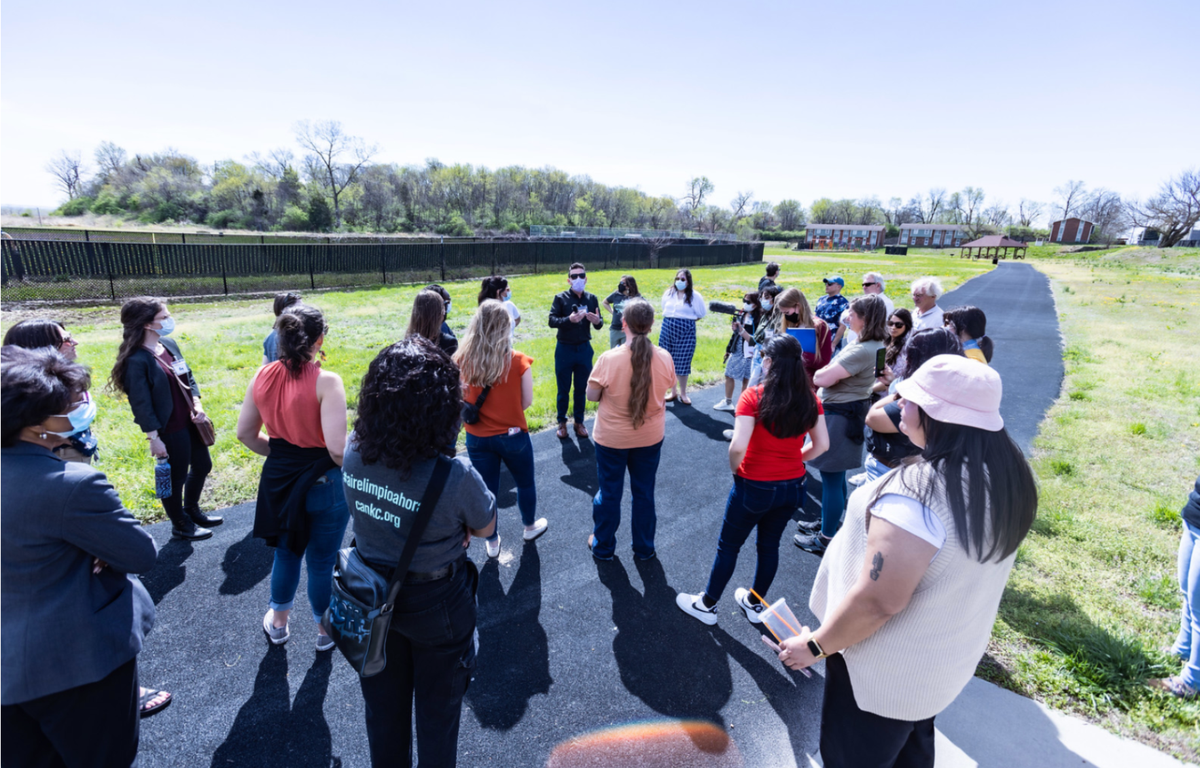
In Kansas City, Kansas, the community-based organization RiSE4EJ is laying the groundwork to do just that. Over the past several years, RiSE4EJ has successfully fought to minimize local pollution burdens and accelerate electrification and clean energy adoption for environmental justice communities in Kansas City. When the East Side Energy Storage Project proposed building a 300 MW battery storage facility located approximately nine miles west of the Kansas City neighborhoods of Armourdale and Argentine, where RiSE4EJ has long organized—communities that have long experienced disproportionate cumulative pollution burdens—RiSE4EJ was ready to engage in the planning process. Building on its ongoing electrification and energy justice work, the organization combines grassroots community knowledge and local data with technical energy modeling to ensure community members have a meaningful voice in project planning and decision-making.[5]
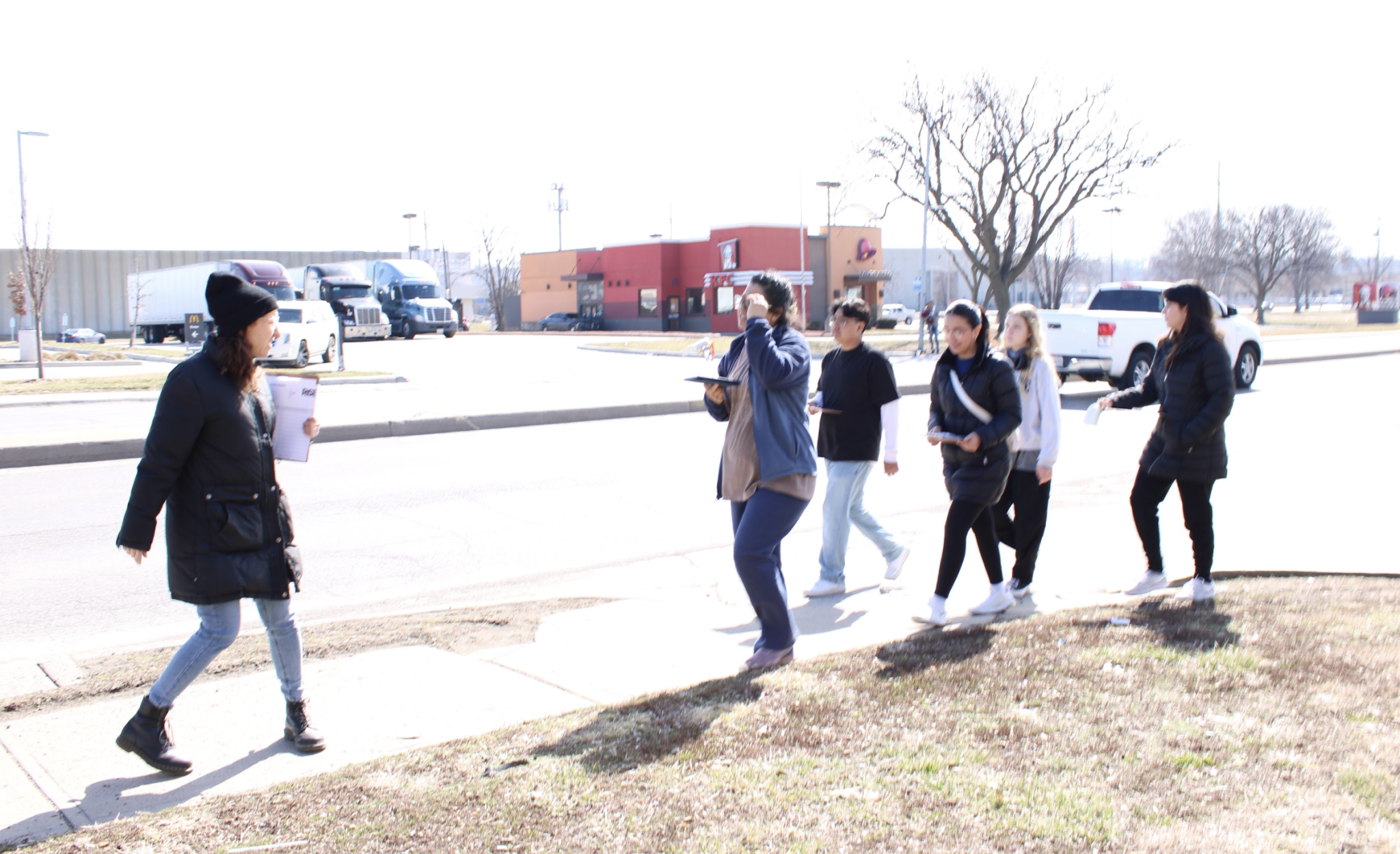 Advancing just solutions through inclusive planning and environmental justice - Beto Lugo Martinez
In many communities across the country, battery energy storage projects have faced opposition, in some cases due to confusion between energy storage facilities and energy-intensive data centers. In contrast, RiSE4EJ views energy storage as a critical component of the clean energy transition. Its focus is on ensuring that projects are developed transparently, with robust community engagement, and in ways that deliver meaningful benefits while minimizing potential harms for nearby residents. For example, energy storage can help address the projected growth in electricity demand, which is driven in part by longer-duration heat waves and weather extremes. It can also provide a lifeline after climate disasters that cause flooding and blackouts in communities with aging infrastructure, and minimize the compounding impact these disasters have on existing public health burdens in frontline communities. Battery storage can be used to integrate clean energy, improve grid reliability in the face of a changing climate, and reduce historic environmental burdens caused by fossil-fuel power plants.
The benefits of energy storage can therefore advance environmental justice goals, but to do so, communities need to have a meaningful role in the planning process for these facilities. RiSE4EJ aims to ensure that communities are represented in the planning process so large-scale energy investments deliver direct benefits to the people living near the facilities. They work to hold companies accountable with enforceable guardrails put in place to protect public health, prioritize community safety, and plan for eventual decommissioning.
The $250 million East Side Energy Storage Project plans to occupy 10 acres of a rural 64-acre plot about eight miles west of Kansas City’s downtown, surrounded by farmland. The project will employ lithium iron phosphate batteries, a type of lithium-ion battery less prone to fires and that uses less hazardous materials than the battery types that have led to fires at other facilities.[6] The project website claims it will reduce electricity system costs by $9 million a year, provide $27 million in local revenue, contribute $1–2 million in upfront community benefits,[7] and pay $19 million in property taxes over its lifetime.[8]
The Wyandotte County Unified Government Board of Commissioners approved a special use permit for the East Side Energy Storage Project in May 2026,[9] and if all goes according to plan, the facility would be built and operational by 2029.[10] It does not have any specific contracts for its power yet, but it has the support of the Kansas City Board of Public Utilities,[11] and it will likely be used to help reduce stress on the electric grid and meet growing peak demand.
Kansas City, KS is far from alone in seeing the rise of these kinds of projects. Across the state line, Jackson County—home to Kansas City, Missouri—put a full pause on battery energy storage projects for six months starting in June 2026, as part of a larger hold also encompassing data centers, while the County develops rules and regulations for these projects.[12] The inclusion of both batteries and data centers in the same moratorium may reflect confusion among local governments and communities about the risks of these facilities, even though the risks are very different and batteries can actually help alleviate the grid stress and costs associated with new data centers. But the ruling is also indicative of the difficult position local governments are finding themselves in: large industrial facilities are being rapidly built across the country in places with no relevant regulations, limited information and communication from developers, and limited local resources to assess and address potential impacts and benefits.
In the face of these challenges, RiSE4EJ has stepped in to ensure that the East Side Energy Storage project developers, a Texas-based company called Accelergen, and local government work with community members to establish guardrails on energy storage projects and provide clear community benefits. RiSE4EJ’s Battery Energy Storage Systems Accountability Action Plan provides a clear framework for energy storage projects to meet equity, public health, workforce, safety, and accountability goals. Although the Accountability Plan is written specifically for the East Side Energy Storage project, its recommendations are largely universal and can provide a blueprint for communities across the country facing similar energy storage proposals.
The Accountability Plan lays out both the potential benefits of energy storage and the community-driven guardrails needed to ensure these benefits and mitigate risks and impacts.[13] It first outlines some of the environmental justice issues facing Kansas City residents, in particular the cumulative environmental health burdens and poor air quality experienced by frontline communities. These chronic exposures are increasingly compounding with climate disasters, adding to the burdens faced by the region’s least-resourced households. The Accountability Plan next highlights how energy storage facilities can help address these problems. Energy storage can reduce pollution burdens by directly displacing peakers and other fossil fuel power plants, which are disproportionately located in or near disadvantaged communities. These benefits are amplified because storage also enables the integration of higher levels of wind and solar energy, thus displacing more fossil fuel combustion and associated emissions of health-damaging air pollutants and greenhouse gases. If large facilities like the East Side Storage System are complemented by distributed solar+storage systems at homes and businesses, these distributed systems can increase energy resilience by providing backup power during outages and mitigating risks to vulnerable populations, such as the elderly and those reliant on electricity-dependent medical equipment. Both utility-scale and distributed storage can contribute to improving grid reliability by reducing peak demand stress on the grid. And storage can contribute to energy affordability by replacing expensive peaker power plants and transmission upgrades, lowering energy bills.
However, many of these benefits are only achieved if storage is deployed and dispatched strategically to purposefully displace pollution and increase reliability and affordability, and may be outweighed by the risks of the facility if safety protections are not in place. Project agreements are also needed to ensure that investments benefit the local community. Therefore, RiSE4EJ proposes the following accountability framework (read the full Accountability Plan for more details):
-
Community Partnerships: Transparency, Inclusivity, and Accessibility: Storage developers should undertake meaningful community engagement throughout the project lifetime, including the establishment of a community advisory group. Grassroots and community-led organizations should be empowered to lead in these conversations; have access to full project information, data, and decision-makers; be allowed to comment in the permit process; and undertake relevant community-led science and research.
-
Labor Recommendations: Support a just transition and local workforce development by setting local hire targets; providing workforce training and apprenticeships; partnering with local workforce organizations and community-based organizations; formalizing project labor agreements; avoiding third-party staffing; providing high road jobs with living wages and benefits; prioritizing health and safety; and targeting training and hiring efforts at displaced workers, at-risk youth, veterans, and other local and underrepresented groups.
-
Battery Energy Storage System Safety Recommendations: Set battery safety requirements, such as requiring outdoor systems with sufficient spacing between racks and setbacks from other buildings; requiring battery technologies with low fire risk (e.g. lithium iron phosphate rather than nickel manganese cobalt batteries); inclusion of advanced monitoring and fire suppression technologies; coordination and training with local fire and emergency responders; safety inspections and site assessment of potential human and environmental risks in the cases of fire; and regular testing and reporting of battery health and safety response systems.
-
Emergency Operation Plans: Develop and widely share emergency operation plans including procedures for emergency shutdown; safety equipment testing; clear signage on site and at the fenceline; rapid public and agency notification in the case of emergency; hazard mitigation procedures; removal of hazardous materials; and regular training for emergency and fire personnel.
-
Decommissioning Plan: Include a description of who will be responsible for each decommissioning activity; costs; hazardous waste disposal; and full site restoration, inclusive of the case of a fire or other disaster. Decommissioning funding should be ensured by the owner/operator through a fund or bond.
RiSE4EJ supports the East Side Energy Storage Project, as long as it is built with binding and transparent safeguards developed with community partners. The team is now in conversations with both Accelergen and the local government to implement its Accountability Plan. Some important measures are already in place. For example, Accelergen is planning to use low-risk lithium iron phosphate batteries housed in preengineered shipping containers, with significant setbacks from neighboring property; is designing a noise study to ensure minimal impact; is planning to conduct up front and ongoing training with the local fire department; will purchase a bond to fund end-of-life decommissioning; and has held multiple community meetings to address questions and concerns. The county special use permit for the project also specifies the requirements for an outdoor battery system with no stacking; training of emergency personnel; visual and noise mitigation; safety and hazard mitigation requirements; investments to upgrade local roadways and provide internet to surrounding buildings; and a bond to fund decommissioning.[14] However, many details still need to be worked out, including a community oversight plan; community benefit agreements to support local infrastructure investments, non-profits, or other community priorities; local hire and apprenticeship requirements; and a binding approach to ensuring accountability throughout the project lifespan and decommissioning.
Moving forward, RiSE4EJ’s Accountability Plan provides a clear set of requirements that is replicable at many levels of decision-making. At the local level, other community-based organizations or local governments can learn from this framework about energy storage use and benefits and apply it to negotiate with developers to ensure local benefits and mitigate safety risks. At the state level, many of the proposed requirements—such as safety standards—can be implemented by state regulatory agencies. And developers can look to these guidelines to learn how to work with communities to build trust and ensure smooth project development benefiting both the company and those living nearby.
RiSE4EJ is continuing to follow the local battery energy storage approval and development process and has requested updates on the newly proposed Wolf Creek Energy Storage Project in nearby Bonner Springs. This follow-up reflects RiSE4EJ’s broader commitment to frontline community engagement and public health. As battery storage proposals move forward, local governments and developers have an opportunity to establish a stronger model for clean energy governance. Kansas City, KS can model how battery energy storage development can advance climate and public health goals while incorporating environmental justice principles.
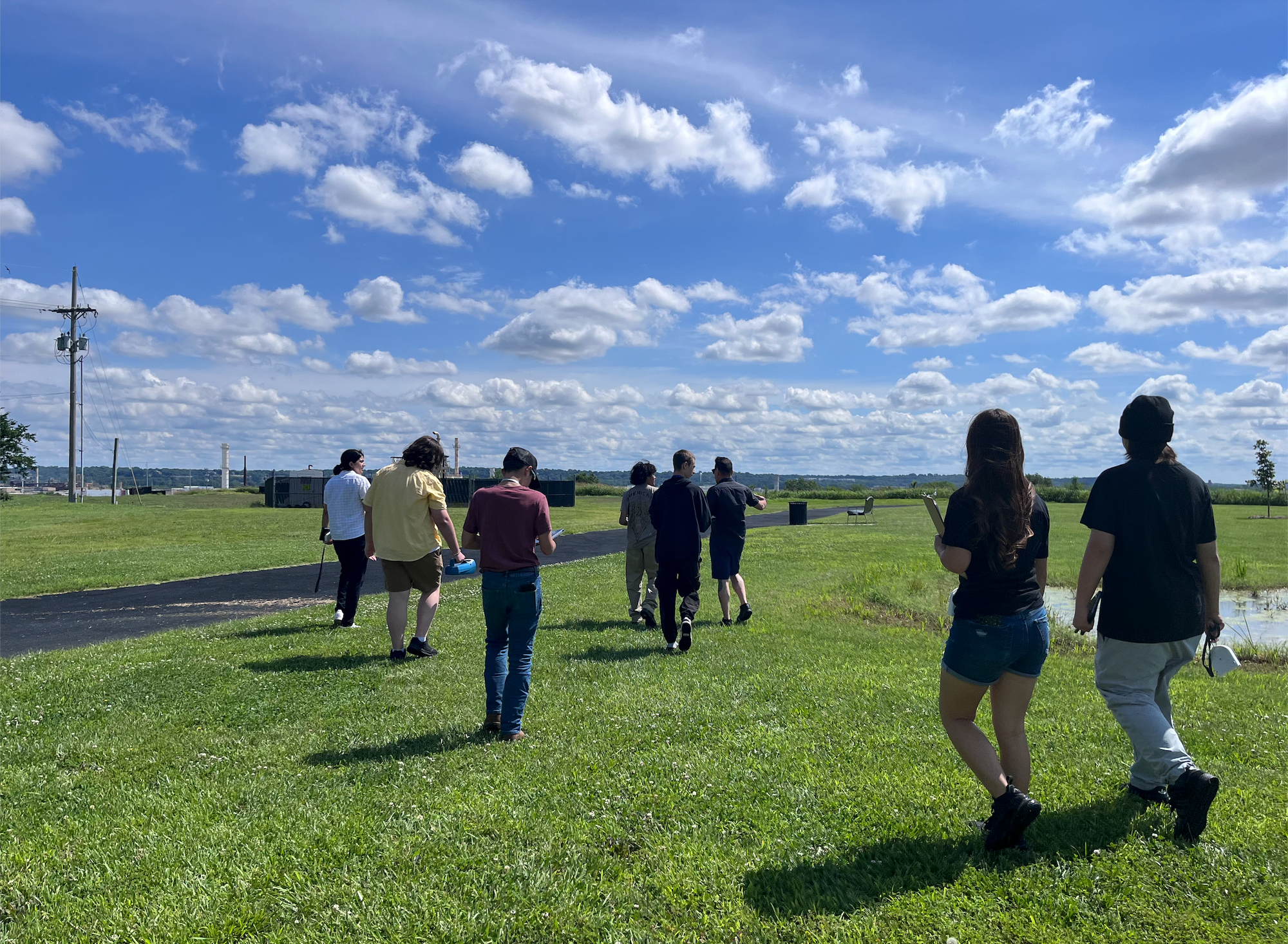
Reimagining and investing in the future begins with understanding local history, ensuring a just transition rooted in community experience - StreetScience
RiSE4EJ’s approach offers a replicable framework for other communities facing similar questions. Battery storage will continue to expand as cities, utilities, and states work to integrate grid reliability. As that expansion occurs, public health and environmental justice must remain central to project design, approval, and oversight.
Common Points of Confusion About Energy Storage
As energy storage expands across the country, limited information and poor communication from implementers have contributed to confusion about energy storage projects and their risks and benefits. A few key examples include:
-
Conflation with data centers: The rapid and overwhelming deployment of data centers has led many communities and local governments to equate energy storage projects with data center projects, even though they have very different potential benefits and risks for communities and, in some cases, batteries could mitigate certain data center impacts.
-
Not all lithium-ion batteries are the same: Communities are frequently told that a project uses “lithium-ion batteries”, but in reality this is a term that encompasses numerous different kinds of batteries which have very different material and safety risks. Specifically, increasingly common lithium-iron phosphate batteries have much lower fire risk and use less hazardous materials than lithium-ion batteries based on cobalt, manganese, and nickel, which were used more frequently in the past and are commonly found in car, laptop, or phone batteries. One of the most notorious battery fires, at Moss Landing in California in 2025, was at a facility with nickel-manganese-cobalt-based lithium-ion batteries.[15]
-
Design can help mitigate fire hazards: Fire-safe design, in particular battery installations that are housed outdoors with proper spacing, can greatly reduce risk. The Moss Landing facility housed its batteries tightly packed indoors.
-
Household-scale batteries are important too: Batteries can provide many benefits, but their size, location, and operation affect the benefits. In particular, large utility-scale energy storage systems can improve grid reliability, while smaller battery systems located behind the meter at homes and businesses can increase resilience in the case of outages.
-
Emissions: Construction at an energy storage facility can have local emission impacts from heavy duty equipment, trucks, and other operations, but ongoing operation at a battery storage facility has minimal on-site emissions of health-damaging air pollutants, except in the case of fire or other major battery damage.
RiSE is an environmental health & justice organization, whose mission is to bring attention to the community led solutions in resistance to chemical exposures, environmental toxins, environmental racism, and ecological destruction-all of which negatively impact the health of overburdened communities. We stand firm the right that people of color, indigenous and immigrants be free from any form of discrimination or bias. Recognizing our natural relationship with the land, affirming self determination, and the cultural integrity of our communities.
Energy Vault. Cross Trails Battery Energy Storage System. Accessed: July 8, 2026. ↩︎
Turner, Z. (2026). Duke Energy unveils new battery at former coal plant to ‘fill the gap’ between clean energy generation. WUNC News. ↩︎
SEIA. (2026). Energy Storage Market Outlook Q1 2026. ↩︎
SEIA. (2026). Energy Storage Market Outlook Q2 2026. ↩︎
RiSE4EJ. (2025). Powering Armourdale's Future: A Community Story of Clean Energy and Resilience. ↩︎
Spector, Julian. (2025). Why we don’t need to worry too much about the latest grid battery fire. Canary Media. ↩︎
East Side Energy Storage. East Side Benefits Summary. Accessed: July 8, 2026. ↩︎
Strategic Economic Research. (2025). Economic Impact Analysis for the East Side Storage Project. ↩︎
Zeman, Sofi. (2026). KCK pushes forward $250M battery storage facility plans, expects to reduce bills. The Kansas City Star. ↩︎
East Side Energy Storage. Accessed: July 8, 2026. ↩︎
Wyandotte County-Kansas City, KS Unified Government Agendas & Minutes, Planning & Zoning/Board of Commissioners. April 30, 2026. ↩︎
Boring, S. (2026). Jackson County legislature passes 6-month moratorium on data center applications. KCTV5. ↩︎
Lugo Martinez, B. (2026). East Side Energy Storage: Battery Energy Storage Systems Accountability Action Plan. RiSE4EJ. ↩︎
Wyandotte County-Kansas City, KS Unified Government Agendas & Minutes, Planning & Zoning/Board of Commissioners. April 30, 2026. ↩︎
Spector, Julian. (2025). Why we don’t need to worry too much about the latest grid battery fire. Canary Media. ↩︎