Energy Affordability: Building A Commons Culture
Energy affordability is as much a feature of culture as of technology; we need a reorientation towards energy commons.

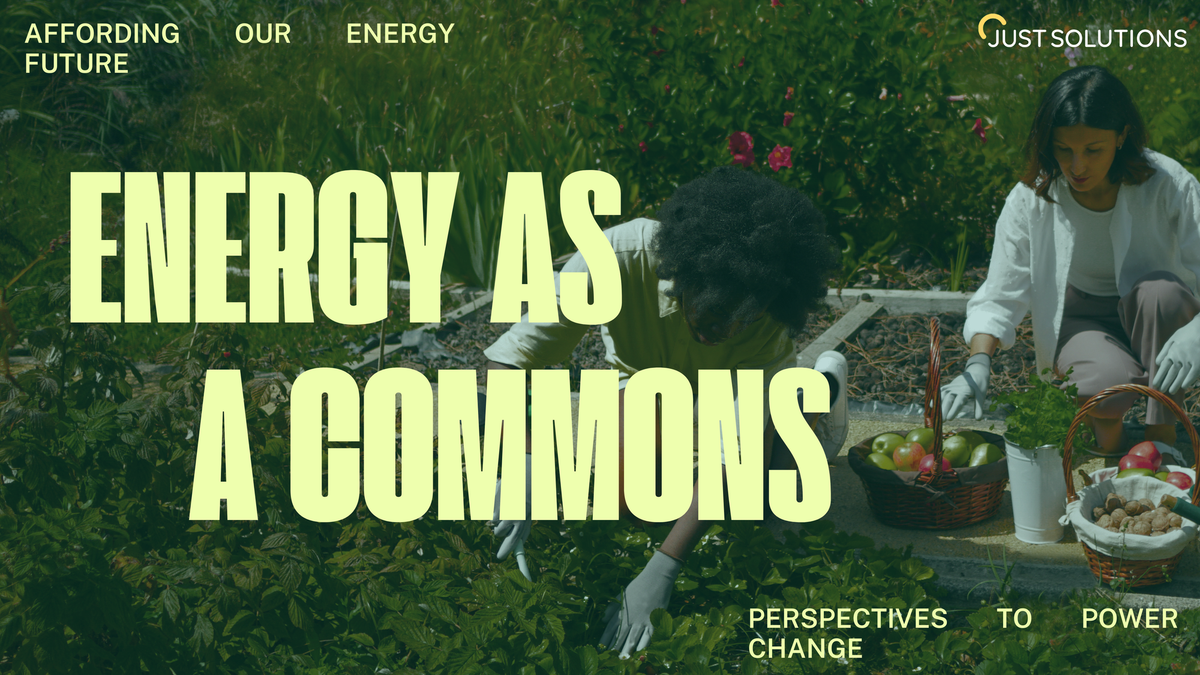
Authors: Denise G. Fairchild, Ph.D. and Selena Feliciano
Introduction
Elections are often won or lost on pocketbook issues. The price of gas, groceries, and housing regularly dominates political debate. Utility costs—once a quieter concern—have now joined the front lines of affordability politics.
Rising energy prices are driven by many forces: aging infrastructure, grid modernization, the transition to renewable energy, growing consumer demand, the energy appetite of the AI sector, consolidation through corporate utility buyouts, and the erosion of federal assistance programs that once helped keep bills affordable. Public responses to these pressures have focused largely on technological and financial fixes—cheaper fuels, improved efficiency, and consumer subsidies.
What remains largely unexamined is the cultural dimension of energy: how our collective values, economic systems, and social norms shape energy demand—and, in turn, affordability across every sector of the economy, from housing and food to transportation and utilities.
Every major energy transition has produced not only new technologies, but profound cultural change. The shift from human and animal labor to fossil fuels transformed societies organized around sufficiency and cooperation into economies driven by mass production, consumption, and individualism. Today’s affordability crisis cannot be solved without confronting this deeper cultural legacy.
Addressing energy affordability requires a reorientation—away from energy as a commodity optimized for exchange and profit, and toward energy as a shared resource designed to meet human needs. Because cultural transformation accompanies every energy transition, this moment presents an opportunity: to reclaim energy as a commons and rebuild a culture of abundance rooted in collective well-being.
Energy Burden
Rising utility costs affect everyone, but the burden is far from evenly shared. Low-income households, rural communities, and communities of color spend a dramatically larger share of their disposable income on energy—often three to four times more than higher-income households—despite consuming less energy overall.
When families cannot afford their utility bills, the consequences are severe. Shutoffs, mounting debt, and impossible trade-offs between energy, food, housing, and healthcare are common. Many households are locked into outdated, inefficient, and polluting energy systems—“energy ghettos”— that further drive up costs while offering few opportunities for upgrades or relief.
Policy responses typically focus on technical solutions: expanding energy supply, increasing efficiency, decarbonizing fuel sources, or offering bill assistance. Utility affordability programs— such as rate restructuring, on-bill financing, demand response, or microgrids—are important and necessary. But they largely treat symptoms rather than causes.
The deeper problem is cultural. As societies have shifted toward increasingly energy-intensive systems, access to energy has become both essential and precarious. High-energy lifestyles are now normalized, even as they strain household budgets and public infrastructure.
The Cultural Dimensions of Energy
Culture shapes how societies understand the world, how they organize daily life, and how they define progress. Anthropologists have long noted that energy transitions are among the most powerful drivers of cultural change, reshaping work, gender roles, governance, education, and economic systems.
For much of the twentieth century, scholars framed rising energy use as a marker of human advancement. Increased productivity, efficiency, and output were equated with social progress. Industrialization, powered by coal and later oil, was seen as a triumph of human ingenuity.
But this narrative obscures what was lost. As energy systems became centralized, capital-intensive, and profit-driven, communal values eroded. Shared resources were privatized. People shifted from producing energy, food, and goods locally to consuming mass-produced commodities. Energy itself was transformed from a means of meeting basic needs into a driver of perpetual economic growth.
This transformation did not occur by accident. Throughout the twentieth century, governments and corporations actively cultivated energy-intensive lifestyles through marketing, electrification campaigns, and cultural messaging that equated consumption with modernity, convenience, and success. High energy use became synonymous with status and progress.
The result is a monopolized energy system that demands ever-increasing production to sustain a consumer economy—regardless of human or ecological cost.
Energy, Culture, and Affordability
Today’s affordability crisis is inseparable from this cultural framework. We are embedded in an energy system that we depend on, even as it undermines economic security.
Cultural norms shape energy demand in powerful ways. Individualist societies tend to prioritize convenience, autonomy, and private consumption—leading to higher energy use. In contrast, cultures that value collectivism, equity, and long-term planning tend to rely more on shared infrastructure and experience lower levels of energy deprivation.
Research across countries shows that more egalitarian and participatory societies—those emphasizing cooperation, gender equity, and long-term orientation—are less likely to experience severe energy poverty. Meanwhile, cultures organized around mass production and overconsumption drive demand beyond what households can sustainably afford.
Energy affordability, then, is not simply a technical problem. It is a cultural one.
Building an Energy Commons
If energy is fundamental to life, how might energy systems be designed to secure life rather than extract value? The answer lies in reimagining energy as a commons—a shared resource governed collectively to meet basic needs.
Across the country, community-based energy initiatives are already modeling alternatives. At the Energy Democracy Project, a U.S. network of over 40 organizations spanning Alaska to Puerto Rico, practitioners go beyond technological innovation to develop culturally-relevant initiatives that meet community needs. The energy democracy movement seeks to pair clean energy transitions with new ownership structures, cooperative governance, and cultural values rooted in care, stewardship, and mutual responsibility.
These typically frontline organizations are committed to a just clean energy transition, where renewable energy is accessible to communities disproportionately impacted by climate change, health, and the rising cost of the fossil fuel economy. Renewables are projected to significantly reduce wholesale electricity costs over the coming decades, but only if the transition is equitable and politically protected. Without intentional design, the benefits risk flowing upward while costs are passed down.
Equally important is changing how energy is distributed. More decentralized systems—where households and communities become energy producers as well as consumers—can lower costs, increase resilience, and democratize access. These systems also open the door to circular economies that respect material and ecological limits.
Yet changing fuel sources and the energy system alone are not enough. Renewable energy can easily reproduce extractive, growth-driven logics if cultural values remain unchanged. The deeper shift must be ethical as well as technical—toward sufficiency, care, and shared prosperity. For this reason, local community organizing groups engage residents in stewarding shared community leadership, local business development, and innovative mutual aid efforts in cities like Detroit, Cleveland, and Santa Fe. Energy democracy policy advocates push for federal and state policies that enable more community members to hop aboard the movement for new kinds of energy systems–those that emphasize life over extraction.
Together, these organizations at the Energy Democracy Project practice the energy commons in real time: sharing lessons learned and envisioning a collective future where zip codes across the country have local clean energy that is clean, sustainable, affordable, and able to mitigate and adapt to climate change. It’s people and planet over profit.
Ultimately, a new cultural narrative is needed to build a commons future for all. Societies that romanticize individualism and private consumption tend to resist shared solutions. Those who prioritize collective well-being are more likely to support public infrastructure, cooperative ownership, and commons-based energy systems. Fighting the affordability crisis, therefore, requires redefining and re-norming notions of progress, wealth, and well-being to reduce energy production and consumption. For these reasons, a new cultural movement is emerging through the Ubuntu Climate Initiative to hack the hegemonic narratives driving the consumer economy, shifting it towards narratives that recognize the long history and ways of traditional pan-indigenous cultures that honor communal values and practices. Advocates in the energy democracy, land justice, food sovereignty, water equity, and housing justice movements are working together with cultural artists to spark a cultural reparation of beliefs and practices where mutuality replaces affordability as the energy issue of the 21st century.
The policy work in advancing energy commons and culture includes:
- Supporting decentralized, community-driven renewable energy systems,
- Establishing non-GDP measures of well-being at the community, state, and federal levels,
- Establishing repairability and durability standards to reduce demand, and
- Providing resources for communities to organize and implement cooperative clean energy systems.
Conclusion
Energy transitions have always reshaped society. The question before us is not whether change will occur, but what values will guide it. Addressing energy affordability requires more than new technologies or subsidies—it demands a cultural reckoning.
By reclaiming energy as a commons, we can move toward systems that prioritize human needs over profit, cooperation over consumption, and shared abundance over scarcity. In doing so, energy can once again serve its most essential purpose: sustaining life and community.
This essay is an excerpt of our anthology, "Affording Our Energy Future: Perspectives to Power Change." To read the full body of work, visit our website.